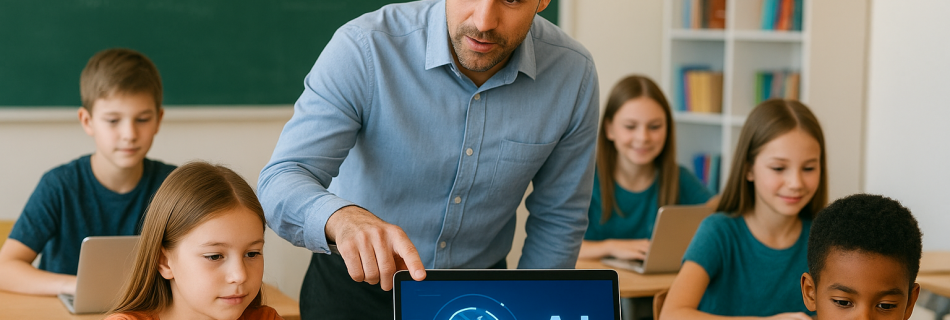
Chris Bressi on Using AI to Support Teachers and Students Alike
Artificial Intelligence (AI) has moved from being a futuristic idea to a real force shaping classrooms today. Across schools and universities, educators are beginning to see how AI can transform not just how students learn, but how teachers teach. Yet, while some see AI as a replacement for human roles, others like Chris Bressi, an innovative education leader and consultant, see it as a powerful partner. Bressi’s approach highlights how AI can strengthen the teacher-student connection, streamline learning, and make education more human than ever before. AI as a Partner, Not a Replacement For Chris Bressi, the key message is clear: AI should empower, not replace. “Technology can’t replicate human empathy, intuition, or the ability to inspire,” he often says. “But it can help teachers do those things more effectively.” Instead of viewing AI as competition, Bressi believes schools should embrace it as a tool that amplifies what teachers already do bestguiding, motivating, and supporting students. AI can handle repetitive tasks, analyze performance data, and personalize learning experiences, giving educators more time to focus on creativity and connection. In Bressi’s words, “When AI takes care of the administrative noise, teachers can focus on what really matters the students.” Making Learning Personal Again AI’s greatest strength in education lies in its ability to personalize learning. Traditional classrooms often struggle to meet the needs of every student. Some learners grasp concepts quickly, while others need more time or different teaching methods. Through AI-driven platforms, teachers can provide individualized paths that cater to each student’s strengths and challenges. Chris Bressi points out that adaptive learning systems, like AI-powered tutoring apps and intelligent content platforms, can track progress in real time. These systems adjust the level of difficulty, suggest additional exercises, and even detect patterns in how students respond to questions. Imagine a student struggling with algebra. Instead of falling behind, an AI tool can recognize the issue early and offer extra visual explanations, videos, or games to reinforce understanding. Meanwhile, teachers receive instant insights on which students need extra help. “Personalized learning isn’t about isolation,” Bressi explains. “It’s about giving every student the right kind of support at the right time. AI makes that possible at scale.” Reducing Teacher Workload Teaching is one of the most rewarding yet demanding professions. Between grading assignments, managing attendance, responding to emails, and creating lesson plans, teachers often spend more time on administrative work than actual teaching. Chris Bressi advocates using AI to lighten that load. Tools like AI grading assistants, automated scheduling systems, and lesson plan generators can handle much of the repetitive work. For example, AI can grade objective quizzes in seconds or offer instant feedback on essays, highlighting areas for improvement based on rubrics set by the teacher. This doesn’t mean replacing human judgment, it means freeing educators from the paperwork that keeps them away from meaningful student interaction. “When teachers have time to breathe, they can innovate,” Bressi says. “They can experiment, build stronger relationships, and focus on the emotional and creative aspects of teaching.” Supporting Student Wellbeing Through AI Insights One of the lesser-known but deeply impactful uses of AI in education is its ability to detect patterns in student engagement and wellbeing. AI tools can track attendance, participation, and even subtle changes in behavior or performance that may signal stress or disengagement. Chris Bressi highlights that these insights can help teachers and counselors intervene early. “A drop in participation might not just mean a student is bored,” he explains. “It could mean they’re struggling emotionally. AI can help flag those patterns before it’s too late.” Some schools are already using AI dashboards that analyze digital activity, such as assignment submission times and online behavior, to alert staff when a student might need extra attention. This kind of proactive approach supports both academic success and mental health, two pillars that Bressi believes must go hand in hand. Bridging Gaps in Accessibility AI also opens doors for students with disabilities or those who face language barriers. Text-to-speech programs, real-time translation tools, and adaptive testing platforms are making learning more inclusive than ever. Chris Bressi often refers to accessibility as “the heart of educational innovation.” He believes technology’s true power lies in its ability to level the playing field. “Every child deserves the chance to learn without limitation,” he says. “AI can give that opportunity to students who have been left out by traditional methods.” For instance, visually impaired students can now use AI-powered screen readers that describe graphs and images. Students learning English can translate complex instructions into their native language without waiting for additional resources. These innovations don’t just help learners, they empower teachers to reach everyone in the classroom, regardless of ability or background. Ethical Use and Teacher Training Of course, with great innovation comes great responsibility. Chris Bressi emphasizes that AI in education must always be implemented ethically and with proper oversight. Concerns about data privacy, algorithmic bias, and overreliance on automation are real, and must be addressed transparently. “AI should never be a black box,” Bressi warns. “Teachers need to understand how it works, what data it collects, and how decisions are made.” That’s why Bressi encourages professional development programs focused on AI literacy for educators. Teachers need to feel confident in using AI tools not intimidated by them. Schools that invest in training ensure that technology becomes a friend, not a frustration. He suggests that districts start small: pilot programs, open discussions about data ethics, and partnerships with trusted education technology providers. “The goal is to use AI responsibly,” he adds, “and always keep human judgment at the center.” Enhancing Collaboration and Creativity While AI can automate many tasks, it can also inspire collaboration and creativity. Tools that help generate project ideas, visualize complex concepts, or simulate real-world scenarios can spark curiosity in students. Teachers, too, can use AI for brainstorming new lesson approaches or finding global classroom partners for virtual exchanges. Chris Bressi notes that when AI takes over the routine parts of learning, students have …
Read more “Chris Bressi on Using AI to Support Teachers and Students Alike”